
Luxury Trends Report: 10 Shifts Redefining the High-End Market
25 August 2026Written by Jason Hayes
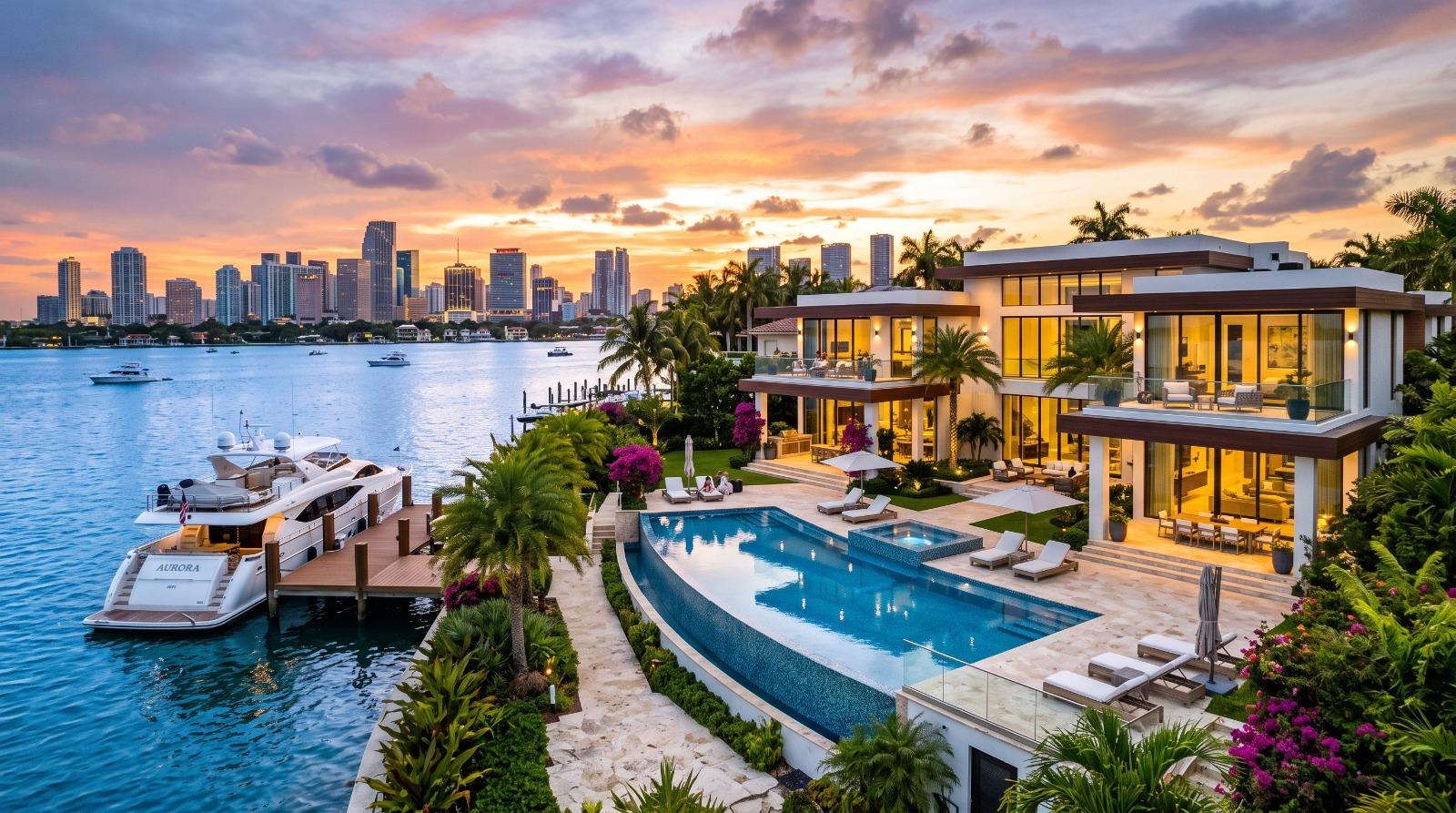
Something structural shifted in luxury this year, and the word “trends” undersells it. The Bain & Altagamma Worldwide Luxury Study, June 2026, describes a sector navigating four interconnected forces simultaneously: experiences pulling far ahead of ownership, geography rebalancing away from China and Europe toward the Americas, consumer meaning evolving at pace, and AI disrupting every customer touchpoint from discovery through to post-purchase service. Global luxury spending reached €1,443 billion in 2025. The market isn’t contracting — it’s reconfiguring, hard and fast, around a set of questions it has never had to answer before. Here are the ten shifts defining the answer.
Key Takeaways
• Global luxury spending reached €1,443 billion in 2025. Personal luxury goods are forecast to reach €365–€373 billion in 2026, up 2% to 4% (Bain & Altagamma, June 2026).
• Luxury experiences are outpacing tangible goods by 1.5 times. Hospitality, mega-yachts, private jets and art are growing at +4%.
• The active luxury buyer base has contracted from 400 million in 2022 to approximately 330 million today — a total loss of 70 million consumers, with 20 million leaving in 2025 alone.
• Generational wealth transfers reached $6 trillion in 2025 — 10% of global GDP — bringing a new cohort of inheritor-buyers into the market.
• AI is becoming a decisive force in luxury purchasing decisions, personalising discovery, authentication and experience delivery.
• The Americas are now carrying the global luxury market as Europe and the Middle East face headwinds and China enters a cautious, selective recovery.
The 10 Shifts at a Glance
# | Shift | What it means | Category |
1 | Experiences Win | Experiences growing 1.5× faster than goods | Market |
2 | Service is the product | The curation and access layer defines the experience | Hospitality |
3 | AI personalises luxury | Decisive across discovery, authentication and curation | Technology |
4 | Curation replaces discovery | AI filtering at UHNWI-level personalisation | Technology |
5 | Wellness is status | Longevity, biometrics and wellness real estate accelerate | Wellness |
6 | Sleep and cognition | Performance metrics replace product accumulation | Wellness |
7 | Branded residences everywhere | 20–30% premium, pre-completion demand | Real estate |
8 | Off-plan leads branded | Buyers committing years before completion | Real estate |
9 | Aviation reinvents itself | Fractional models mature, sustainability accelerates | Mobility |
10 | Wealth transfer arrives | $6 trillion inherited in 2025; new buyer cohort emerges | Wealth |
Shift 1 — Experiences Win. Things Lose.
The most consequential data point in the Bain-Altagamma 2026 study is deceptively simple: luxury experiences are growing 1.5 times faster than luxury goods. A handbag can be photographed. A restaurant table, a spa ritual, a private concert for twelve on a chartered superyacht — these cannot be replicated by the person who bought the same bag. Exclusivity, in 2026, lives in the moment more than in the object. Luxury hospitality is the direct beneficiary. High-end travel has not merely recovered from the pandemic; it has reconfigured upward, with spending per trip, duration and level of personalisation all rising. The buyers who emerged from that period with intact or growing wealth accelerated their experiential spending and have not reversed course.
Shift 2: The service layer is now the product. The room is table stakes. The curation, the access, the relationship with the GM, the private tour before the museum opens — these are what the world’s highest-spending guests are choosing between.
Shift 3 — AI Personalises Luxury at Scale
Bain identifies artificial intelligence as “increasingly decisive in luxury purchasing choices” in 2026. That language, from a firm that chooses its words carefully, represents a genuine inflection. AI is operating across the luxury journey in ways that would have sounded speculative two years ago: personalised product recommendations that learn from browsing and purchase history, authentication services verifying watch and bag provenance in real time, AI concierges managing private aviation itineraries, and design tools allowing bespoke furniture to be configured and visualised before a single piece is cut. The brands deploying these tools most effectively, see advertising luxury real estate with AI, are seeing measurably higher conversion rates and lower abandonment at the consideration stage.
Shift 4: Curation replaces discovery. The overwhelming supply of luxury — of hotels, of products, of experiences — has made the ability to filter and recommend the most valuable service in the category. AI is beginning to perform this function at a level of personalisation that no human concierge could match at scale.
Shift 5 — Wellness Is the New Status Symbol
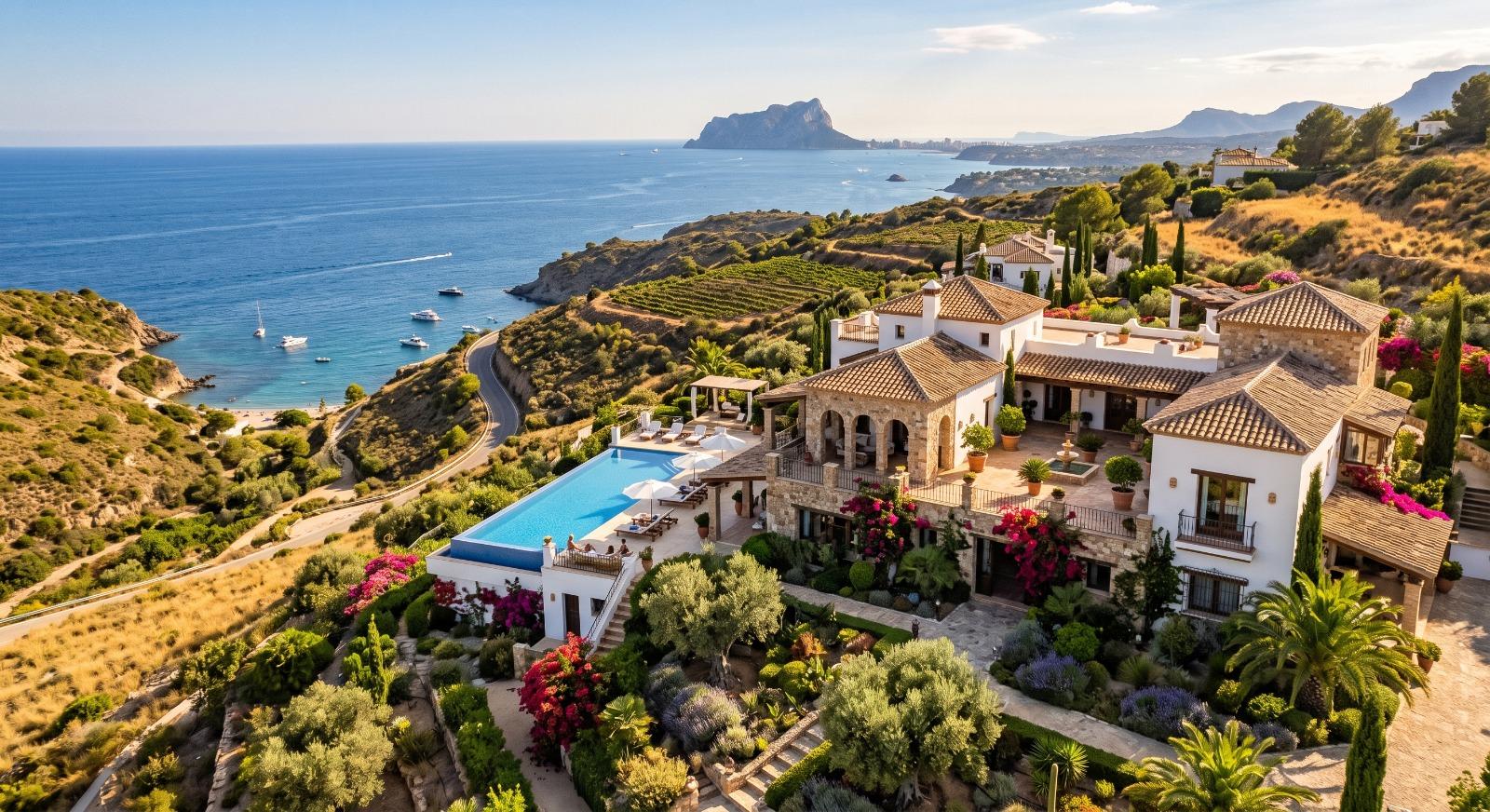
Longevity has become luxury’s most competitive frontier. Private clinics offering biometric profiling, IV therapy, genetic testing and personalised supplementation are expanding into standalone destinations — not adjacent to hotels but replacing them in the consideration set of the highest-net-worth buyers. The Maldives, Switzerland and UAE are all consolidating this position. Wellness real estate — residences built around longevity programming, air quality, circadian lighting, sound design and chef-prepared functional nutrition — is now a genuine investment category attracting serious capital from family offices that a decade ago would have dismissed it as a lifestyle preference rather than an asset class. For buyers tracking this intersection of health and real estate, luxury real estate insights connect the two categories.
Shift 6: Sleep, recovery and cognitive performance are luxury currencies. The UHNWI who once collected timepieces now collects sleep data and VO2 max scores. The markets serving that buyer are expanding faster than almost any adjacent category.
Shift 7 — Branded Residences Go Everywhere
Aman, Four Seasons, Rosewood, Bulgari, Porsche Design. The list of non-hotel brands entering residential is growing faster than the supply of truly exceptional locations can support. Branded residences commanded premiums of 20–30% over comparable unbranded stock in prime locations in 2025, according to Knight Frank. For buyers, the value proposition is clear: the service infrastructure, the brand assurance, the professional management and the global network of reciprocal access that comes with a key. For developers, a flag from a recognised luxury brand compresses sales timelines and justifies pricing that standalone projects rarely achieve, even at identical build quality.
Shift 8: Off-plan branded product is the category’s single fastest-growing segment. Buyers are committing years before completion, at full premium, for the right name on the door. Browse current
Shift 9 — Private Aviation Reinvents Itself
Private aviation is no longer a binary between full ownership and charter. Fractional programmes, jet cards and membership clubs have matured into sophisticated instruments that give buyers managed fleet access without the fixed costs of outright ownership. The category is simultaneously expanding and being disrupted: sustainable aviation fuel adoption is accelerating under regulatory and UHNWI client pressure, and fleet operators increasingly compete on carbon accountability as much as on service and cabin specification. Electric and hybrid aircraft are moving from concept to certification timelines that matter, with several programmes targeting commercial entry before 2030.
Shift 10 — The Great Wealth Transfer Arrives
Generational wealth transfers reached $6 trillion in 2025, equivalent to 10% of global GDP, according to the Sotheby’s International Realty 2026 Luxury Outlook. These inheritors are not the same buyers as their parents. They are younger, more globally mobile, more sustainability-conscious, more likely to value access over ownership and experience over acquisition. They are also arriving with scale — and the luxury market, from fashion to real estate to private aviation, is reconfiguring its product, its marketing and its distribution to meet them where they are rather than where their predecessors were. The brands and developers who recognise this shift early are the ones building lasting relationships with the most significant new pool of luxury capital in modern history. For agents and developers reaching this audience, high-end real estate advertising that speaks to experience and legacy rather than specification and size is the critical differentiator.
Key Terms Defined |
Bain-Altagamma Luxury Study — Annual worldwide luxury market study co-published by Bain & Company and Altagamma (Italian luxury goods manufacturers’ association). The recognised industry benchmark for global luxury spending data. The June 2026 edition reported €1,443 billion in total luxury spending for 2025. |
Branded Residences — Residential properties developed in partnership with a hotel, fashion or lifestyle brand, benefiting from the brand’s service infrastructure and global recognition. Commanded premiums of 20–30% over comparable unbranded stock in prime locations in 2025. |
Longevity Economy — The ecosystem of products, services and real estate built around health extension, biometric optimisation, recovery and cognitive performance. One of the fastest-growing investment categories within the ultra-high-net-worth market. |
Fractional Aviation — Shared ownership or managed access models for private aircraft, allowing buyers to acquire a proportion of an asset or a set number of flight hours without bearing full ownership costs. The model has expanded significantly since 2020. |
Generational Wealth Transfer — The movement of accumulated private wealth from one generation to the next. Sotheby’s International Realty estimates $6 trillion was transferred in 2025 alone — 10% of global GDP. This cohort of inheritor-buyers is reshaping luxury demand across every category. |
Frequently Asked Questions |
Is the global luxury market growing in 2026? Yes, moderately. Bain & Altagamma project personal luxury goods growing 2% to 4% in 2026, to €365–€373 billion. Total global luxury spending is forecast at €1,440–€1,470 billion, roughly flat to +2% at current exchange rates. |
What is driving luxury market growth right now? Experiences. Luxury hospitality, private aviation, mega-yachts and art are growing at +4%, outpacing tangible goods by 1.5 times. The Americas are the strongest performing geography in 2026, while Europe and the Middle East face headwinds and China is in cautious recovery. |
Why has the luxury market lost 70 million consumers? From 400 million in 2022 to 330 million in 2025 — 70 million consumers lost in total, with 20 million leaving in 2025 alone. The drivers: post-pandemic normalisation, inflation pressure on aspirational buyers, and brands raising prices faster than perceived value. Over 70% say they intend to return. |
What is a branded residence and why are they so popular? A residential property bearing a hotel or lifestyle brand, backed by that brand’s service infrastructure and global network. They command significant price premiums and strong resale liquidity, which is why both buyers and developers are attracted. |
How is AI changing luxury? Personalisation at scale. AI is operating across product discovery, authentication, itinerary management and bespoke design — performing curation at a level no human can replicate for large numbers of high-value clients simultaneously. |
What does the generational wealth transfer mean for luxury? Inheritor-buyers are younger, more sustainability-conscious, more experience-focused and more globally mobile than the generation that built the wealth. Luxury brands, real estate developers and hospitality operators are all repositioning to meet this new cohort on their own terms. |
Quick Recap |
→ Global luxury spending: €1,443 billion in 2025. Experiences growing 1.5× faster than goods. The Americas lead; China cautiously recovering. |
→ 70 million luxury consumers lost since the 2022 peak — with 20 million leaving in 2025 alone. 330 million active buyers remain. 70% say they intend to return. |
→ Wellness, AI, branded residences, fractional aviation and the $6 trillion wealth transfer are structural forces, not trends, shaping the next five years. |
→ LuxuryProperty.com® presents branded residences, off-plan developments and high-value lifestyle assets to qualified buyers globally. The Luxury Marketplace™. |
Actionable Next Steps |
1. Identify which of the ten shifts most directly affects your investment or lifestyle priorities — the market is reconfiguring around specific categories, not moving uniformly. |
2. If branded residences are on your radar, move early: the best-positioned developments in the strongest markets are selling pre-completion and at a premium that only increases on launch. |
3. Explore the full range of luxury real estate, off-plan developments and lifestyle assets through The Luxury Marketplace™ | LuxuryProperty.com®. |
About The Luxury Marketplace™ | LuxuryProperty.com® |
The Luxury Marketplace™ | LuxuryProperty.com® connects exceptional real estate, superyachts, private jets and luxury vehicles with qualified buyers globally. |