
How Luxury Property Visuals Help Buyers Understand Super-Prime Homes Before Completion
12 August 2026Written by Ahtisham Ashraf
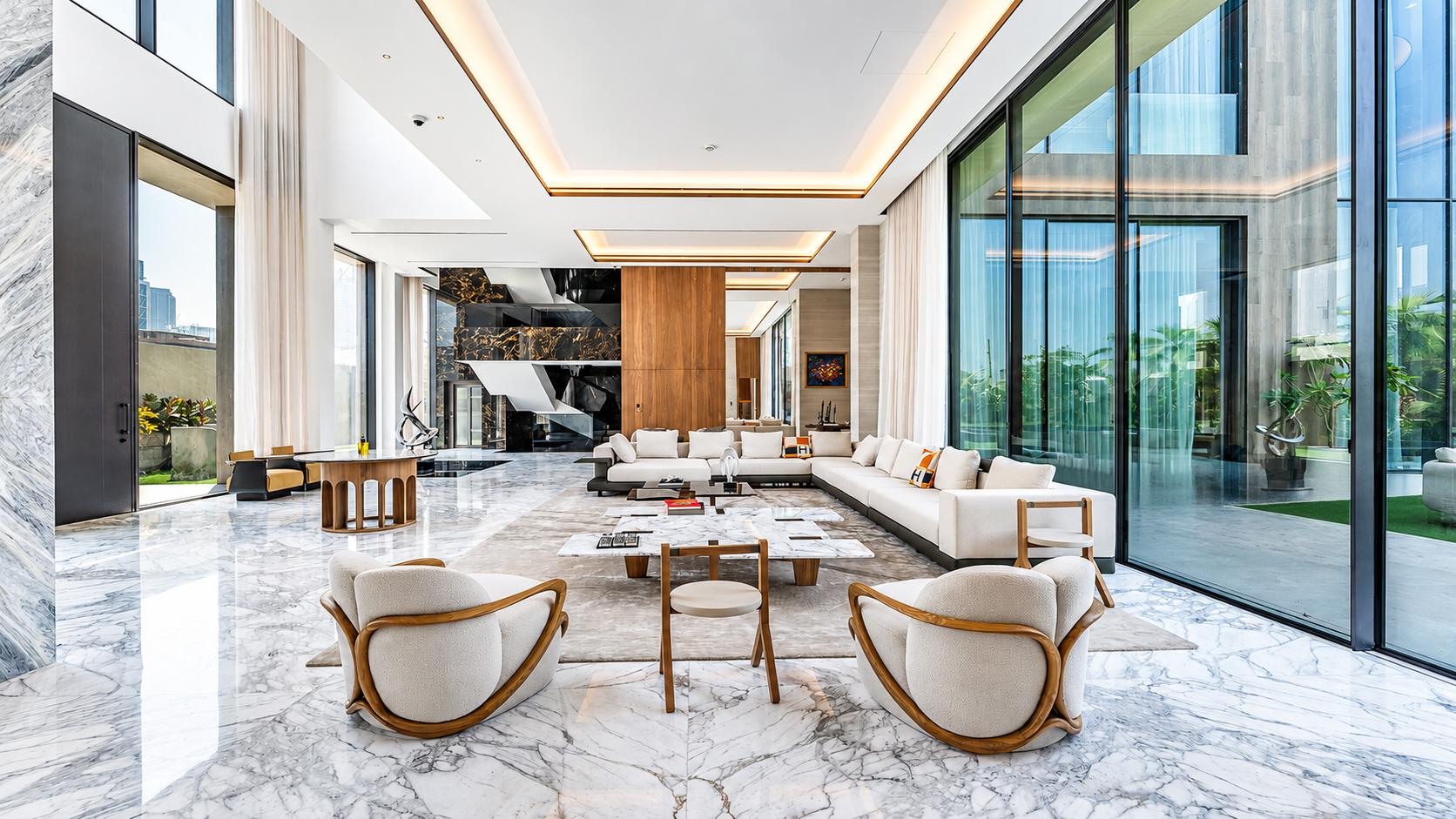
A buyer considering a AED 50 million villa is not, in any meaningful sense, buying square footage. They are buying the sequence of arrival through a gated entrance and up a private driveway. The particular quality of privacy on a Palm Jumeirah frond. The way a double-height living space opens onto a terrace at six in the evening. The confidence that the stone specified is the stone that will arrive. At this level, presentation is not decoration; it is part of trust.
Which creates a genuine difficulty when the property does not yet exist. Off-plan villas, branded residences, penthouse collections and mansion developments are routinely sold years before completion, to buyers who may be reviewing them from London, Singapore or Geneva. The floor plan and the specification sheet are necessary and nowhere near sufficient. What fills that gap — and what serious developers now treat as core to a launch rather than an afterthought — is the quality of the visual presentation.
Luxury Buyers Need More Than a Floor Plan
A specification tells a buyer what they are getting. It does not tell them what it will be like. And in the super-prime segment, what it will be like is the entire proposition.
Consider what a floor plan cannot convey. The arrival sequence and how the property presents itself on approach. Whether the privacy is real or nominal. How the principal rooms are oriented to the view, and whether the best outlook belongs to the master suite or the guest wing. The relationship between inside and outside, which in Dubai's climate determines how much of the home is genuinely usable. Ceiling heights. The atmosphere the materials will create. The true scale of a room. How natural light moves through it. Whether the layout supports entertaining forty people or a quiet family evening, and whether the service and staff areas allow either to happen gracefully.
For developers preparing an off-plan villa, branded residence or penthouse launch, a specialist visualization studio such as archicgi.com can help translate drawings, mood boards and material references into visuals that buyers, brokers and investors can understand before completion. The purpose is comprehension rather than persuasion, which is a distinction the best developers understand and the weakest ones do not.
What the Visuals Should Communicate
A credible visual package for a super-prime home covers considerably more than a hero shot of the façade. It should address the exterior architecture and how the building sits in its plot; the interiors across the principal rooms; the landscaping, pool and terrace; the entrance sequence; the views from the rooms that command them; the amenities; and the material palette shown honestly.
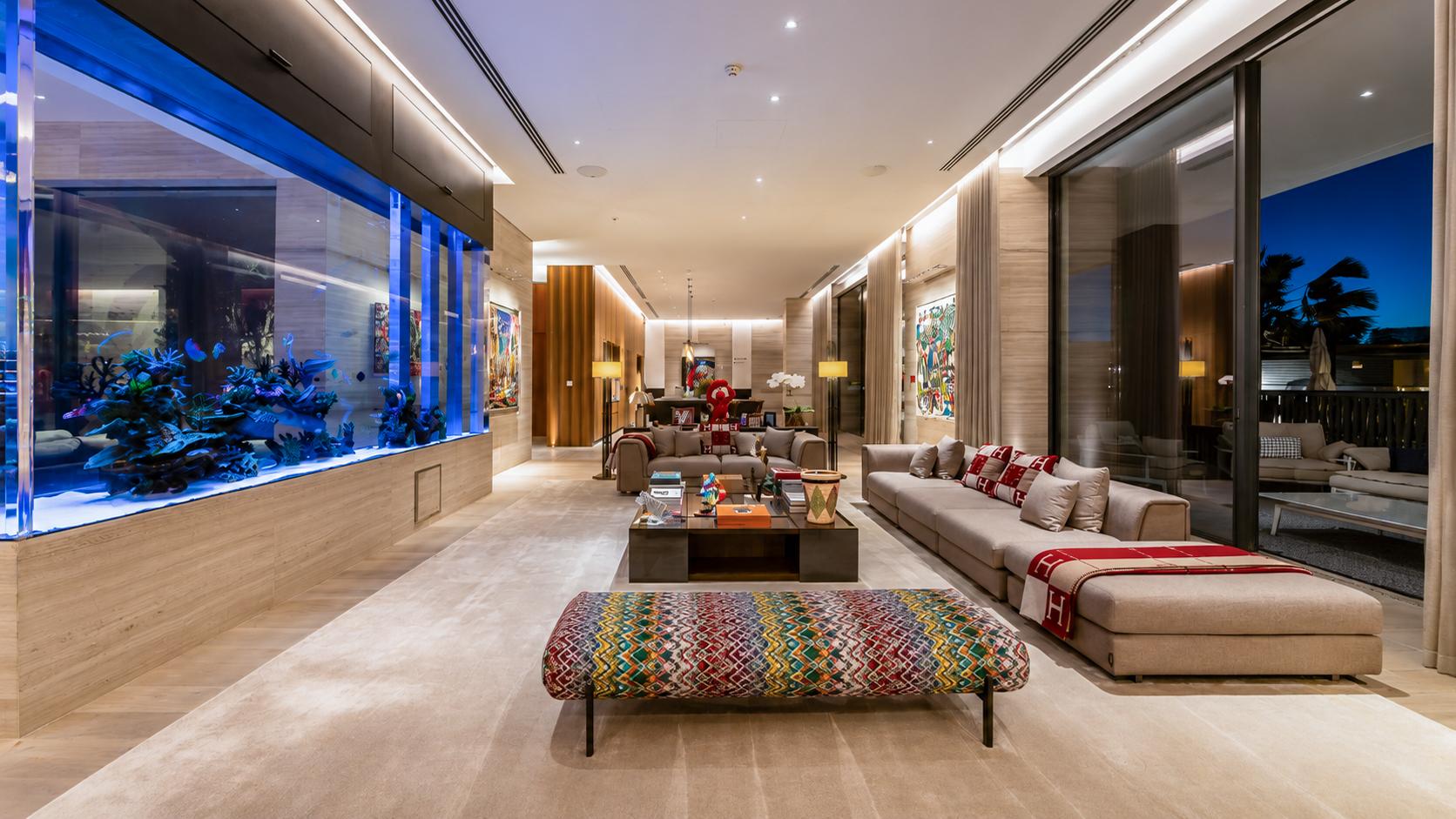
It should also handle light. A property that reads beautifully at midday and has never been shown at dusk is only half presented, and in this market the evening view is frequently the one that sells. Furniture at credible scale matters too, since it is how a buyer calibrates the size of a room. Alongside these, floor plan clarity and master plan context complete the picture, situating the individual home within its community and its immediate surroundings.
Off-Plan Villas, Penthouses and Branded Residences
The categories that depend most heavily on strong visuals are precisely those driving the current market: off-plan villa collections, branded and hotel-serviced residences, beachfront apartments, penthouse floors, mansion collections within master-planned communities, and private estates being built for sale.
Each carries a slightly different burden. A branded residence is selling a service proposition as much as an architectural one, so the visuals must convey the arrival, the lobby, the amenity spaces and the standard of finish that justifies the brand premium. A waterfront villa is selling orientation and privacy. A penthouse is selling the view and the volume of its principal spaces. The visual package should reflect what the property is actually selling, rather than applying the same treatment to every asset in a portfolio.
Showing Lifestyle Without Overpromising
This is the discipline that separates presentation from misrepresentation, and it matters more at the top of the market than anywhere else, because super-prime buyers are advised, experienced and unforgiving of exaggeration.
Visuals should show how the home is lived in — where guests arrive, where family life actually happens, how entertaining flows between the reception rooms and the terrace, how the wellness suite or the gym is used, where privacy is created, and how the service and staff areas support the household without intruding on it. Showing this honestly is far more persuasive than showing an idealised empty room.
What visuals must not do is misrepresent finishes, invent views the property will never have, imply amenities that are not funded, or distort scale. A visual should support the property story without promising what the final home will not deliver. A buyer who arrives at handover to find the marble specified is not the marble installed has been given a grievance, and in a market where reputation travels through a small circle of brokers and advisors, that grievance is expensive.
Interior Materials and Atmosphere
Prime buyer taste in Dubai has been moving steadily toward a quieter register — natural stone, timber, soft textures, indirect lighting and open indoor-outdoor layouts, rather than the harder-edged opulence of earlier cycles. This shift makes material realism in visuals more important, not less, because the appeal now rests on subtlety.
In the super-prime segment, luxury property visuals need to do more than show square footage; they should communicate arrival, privacy, views, interior atmosphere, amenities, outdoor living and the lifestyle logic behind the property. That means the stone reading as the specified stone, the timber warm rather than orange, the brass or bronze accents restrained, the lighting indirect and layered rather than uniformly bright. Bespoke joinery, the spa bathroom, the show kitchen and its adjoining preparation kitchen, the dressing rooms — these are the details a serious buyer inspects, and the visuals should survive that inspection. The best luxury visuals show restraint as much as spectacle.
Views, Context and Location
For a super-prime home, location is not a pin on a map. It is a set of relationships — to the water, to the skyline, to the golf course, to the marina, to the community around it and the road that reaches it.
Visuals should establish these relationships clearly. The orientation of the terrace and garden. The view from the principal rooms rather than an artist's idealisation of it. Aerial context showing the plot within its community, its proximity to lifestyle destinations, and the privacy afforded by its position. Sunrise and sunset conditions where they are part of the appeal. A buyer weighing an Emirates Hills mansion against a Jumeirah Bay villa is comparing settings as much as houses, and the visuals should let them make that comparison honestly.
Visual Assets for International Buyers
A substantial share of super-prime demand originates outside the market, and those buyers make the early decisions remotely. They shortlist digitally, often before any travel is planned. They are introduced through private brokers and reviewed by advisors. Their acquisitions may pass through a family office or an investment committee that never sets foot on site during the assessment.
For this audience, the digital presentation is effectively the property, which is why international property marketing has become so important for super-prime homes reviewed from overseas. It carries the video call with an advisor, the digital brochure circulated to a family office, the online listing, the sales gallery preview and the private client presentation. A property that presents poorly digitally may never reach the shortlist that leads to a viewing — regardless of how it performs in person.
Different Needs Across the Market
For developers, the requirements cluster around launch: off-plan campaigns, investor presentations, branded residence marketing, sales gallery displays, landing pages, hoarding graphics and broker packs.
For brokers and private sellers, the emphasis shifts to individual asset presentation — a premium listing, an editorial feature, a social campaign, an international buyer pitch, or the repositioning of an asset that has been under-presented and consequently under-appreciated. Visuals showing a future renovation concept can also transform how a dated but well-located property is perceived, especially when the home is being prepared for luxury homes for rent in Dubai as well as future resale.
For investors, visuals serve the development vision, the repositioning story, a pre-sale or pre-leasing strategy, and the exit narrative presented to partners.
Common Mistakes in Luxury Property Visuals
The failures are familiar to anyone who reviews these regularly. Visuals over-polished to the point of looking artificial. Interiors that read as generic five-star hotel rather than as a private home. No sense of scale. Absent lifestyle context. Views that flatter beyond reality. Materials that diverge from the specification. Lighting that conceals rather than explains. Amenities presented without any service logic behind them. No floor plan clarity to anchor the imagery. No distinction drawn between concept and final design. Imagery pitched at the wrong buyer profile entirely. And the most common failure at this level is a home that looks expensive and feels emotionally cold, which is exactly why luxury property marketing needs restraint, accuracy and a clear sense of audience.
What to Include in a Visualisation Brief
Property type, location and target buyer profile
The core selling proposition
Floor plans, elevations and site plan
View references from the actual orientation
The material schedule and interior design references
Furniture and styling direction
Landscaping plan and amenity list
Branded residence guidelines where applicable
Lighting mood, with both day and evening scenes
The required views — exterior, principal interiors, aerial, pool and terrace, amenities, master suite, kitchen, arrival and the view shot
Final use — listing, sales gallery, broker pack, investor deck, social campaign, editorial feature, landing page or private presentation
Formats Worth Considering
Exterior and interior hero renders. Aerial views for context. Lifestyle close-ups that carry material detail. A 3D floor plan for spatial clarity, or a dollhouse view for a whole-home read. Virtual tours and architectural animation for buyers reviewing remotely. Master plan visualisation for community context. Interactive tools for a sales gallery. A dusk view, which for waterfront and skyline properties often does more than any daytime image. And, for repositioning work, a before-and-after renovation concept.
In super-prime real estate, materials, views and privacy carry as much weight as floor area — and none of them are legible from a specification sheet. Luxury property visuals are not marketing decoration. For a home that cannot yet be walked through, they are how a buyer comes to understand the design, the lifestyle, the privacy, the scale, the materials and the setting well enough to commit. Produced with restraint and honesty, they build the confidence that a purchase at this level requires. Produced carelessly, they undermine it — which is the more expensive outcome by some distance.