
The Business of Luxury: Why Heritage Brands Continue to Outperform
25 August 2026Written by Jason Hayes
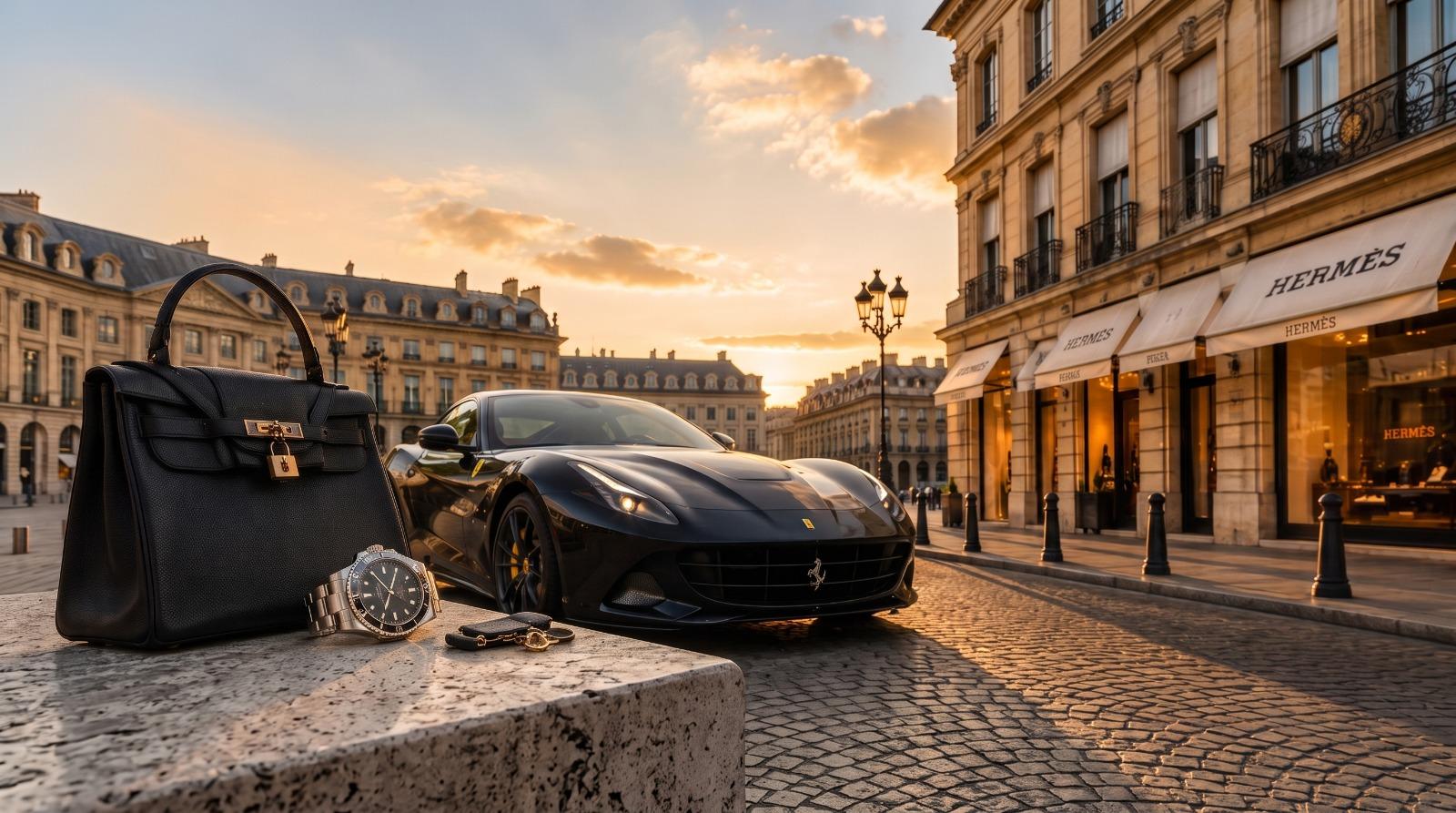
The luxury goods market contracted sharply in 2025. LVMH reported its first meaningful revenue decline in years. Aspirational buyers left. Chinese demand weakened. And yet Hermès crossed €16 billion in revenue for the first time, at a 41% operating margin — the highest of any major luxury group globally. Ferrari raised prices, kept waitlists long and posted a 29.5% operating margin. Rolex’s brand value grew 36% in a year when the broader watch market softened. These are the compound result of business models built deliberately over decades, structured around principles that are simple to articulate and difficult to replicate. This is an anatomy of what those brands do, and why it works.
Key Takeaways
• Hermès reported revenue of over €16 billion in 2025, up 9% at constant exchange rates, with a 41% operating margin — the highest in the global luxury industry. Hermès overtook LVMH by market capitalisation in 2025.
• Ferrari posted revenue of €7.1 billion in 2025 (up 4%) with a 29.5% operating margin, one of the highest profit margins of any manufacturer in the world.
• Rolex’s brand value grew 36% in 2026 to $18.8 billion, according to Interbrand, ranking it among the five fastest-growing luxury brands globally.
• The defining characteristic of the outperformers — Hermès, Ferrari, Rolex, Patek Philippe — is deliberate production scarcity combined with full-price discipline, with no discounting even in difficult market conditions.
• LVMH, the world’s largest luxury group at €80.8 billion revenue, faced a 5% decline in 2025, reflecting the challenge of sustaining scarcity-based pricing across a portfolio of 75+ brands.
• Aston Martin — with heritage dating to 1913 and one of the most recognisable brand identities in the world — posted £493 million in net losses in 2025 and cut 20% of its workforce. Heritage alone is not the answer.
2025 Brand Performance at a Glance
Brand | 2025 Revenue | Operating Margin | Key story |
Hermès | €16+ billion (+9%) | 41% (industry high) | Overtook LVMH in market cap; raised prices through soft market |
Ferrari | €7.1 billion (+4%) | 29.5% | Brand value up 36%; fewer than 14,000 cars/year; long waiting lists |
LVMH | €80.8 billion (-5%) | ~33.9% | Louis Vuitton strong; group-wide pressure from scale paradox |
Rolex | Private (undisclosed) | Private (undisclosed) | Brand value $18.8 billion, up 36%; waitlist demand at record levels |
Aston Martin | £1.26 billion (-21%) | -15% (EBIT loss) | £493M net losses; 20% workforce cut; emergency capital injection |
The Architecture of Scarcity
The most important word in Hermès is not leather. It is not artisan. It is waiting. The Birkin waitlist is not an accident of supply. It is a supply-side decision made by management, enforced consistently over decades, and never compromised for quarterly revenue. Hermès produces what it can make to its own standard, at its own pace, using its own workshops and artisans. When demand exceeds supply — and it always does — the price goes up, not the volume. The result: a 41% operating margin in a year when most of the luxury industry was managing markdowns and inventory overhangs. Read the full numbers in the Hermès FY 2025 results.
Patek Philippe operates a similar model. The Geneva manufacture targets approximately 70,000 to 72,000 watches per year in 2025, according to figures Patek Philippe disclosed. Demand for specific references — notably the Aquanaut 5167A — exceeds supply by multiples. Patek does not increase production to meet that demand. The scarcity is not engineered for marketing purposes. It is a genuine consequence of the production philosophy. The financial result is the same: pricing power that compounds over time.
Ferrari’s Method — Price, Performance and Aspiration
Ferrari’s margin story is not really about cars. It is about understanding which category you are actually competing in. The company has spent twenty years making the case that it should be valued and priced as a luxury brand rather than an automaker. In 2025 that argument produced a 29.5% operating margin — roughly double what most premium automotive manufacturers achieve. The method involves three elements: strictly limited production (fewer than 14,000 cars per year), a configuration system that adds tens of thousands to the base price through personalisation options, and a long-term equity stake in the customer relationship through racing heritage that no competitor can purchase. The same dynamic applies to collector cars at the very top of the market: the Ferrari F50, the McLaren F1, the Porsche 959. Heritage plus scarcity plus full-price discipline is the same formula.
According to the Interbrand 2026 brand rankings, Ferrari’s brand value grew 36% to $14.4 billion. Rolex grew 36% to $18.8 billion. Both figures reflect future pricing power, not just past performance. The association with their respective founding philosophies is not replicable by a new entrant, however well-capitalised. The waiting list for certain models runs to years. None of this is accidental.
The brands that built waiting lists built margins. The brands that built volume built exposure.
LVMH and the Scale Paradox
Louis Vuitton within LVMH is arguably the greatest single brand achievement in the history of luxury. It generates the majority of LVMH’s Fashion and Leather Goods operating profit, which accounts for approximately 75% of the group’s total profit. It has maintained its pricing power through a combination of brand investment, product discipline and global distribution control. And yet LVMH as a group reported revenue of €80.8 billion in 2025, down 5% — its first meaningful decline in years.
The paradox of scale is that it works against the scarcity principle that drives the highest margins. Running 75 brands at the standard of Louis Vuitton is structurally impossible. The group’s best brands outperform significantly. Its more volume-oriented ones face the same aspirational buyer erosion that hit the broader market. The lesson is not that LVMH has failed — it is that size and heritage, alone, are not a substitute for the disciplined scarcity that defines the true outperformers.
When Heritage Is Not Enough — The Aston Martin Lesson
Few brands carry more cultural weight than Aston Martin. Founded in 1913, associated with James Bond since 1964, represented by some of the most beautiful cars ever designed. The heritage is genuine. And yet in 2025 the company reported £493 million in net losses, revenue down 21%, and announced cuts to 20% of its global workforce. In 2026 it received another emergency capital injection as losses continued.
The Aston Martin case demonstrates what the outperformers understood and embedded into their structures: brand desirability and business model are not the same thing. Hermès controls its supply chain, distribution and artisan workforce. Ferrari controls its allocation system, customisation economics and production ceiling. Rolex controls every aspect of its own manufacture and sells only through authorised dealers at fixed retail prices. Aston Martin has had the brand. The operational and financial architecture that converts brand equity into consistent margin has been the missing element. The lesson for every luxury sector — real estate, hospitality, aviation, fashion — is that desirability must be paired with the right structure, or it remains an asset that the balance sheet never captures.
Image 2: luxury-brand-scarcity-pricing-power-craftsmanship-2026.jpg | Before Key Terms
The Lesson for Every Luxury Category
The principles that generate Hermès’s 41% margin and Ferrari’s waiting lists apply directly to luxury real estate. The prime positions — the best addresses in Geneva, Miami, Dubai, Malibu — share the same characteristics as the best watches and the best cars: irreplaceable location (production scarcity), full-price transactions with no distressed selling (full-price discipline), and documented provenance (heritage depth). The properties that consistently outperform over cycles are those that were never discounted, never over-produced and never compromised on quality to meet volume targets. Understanding how heritage properties are marketed through the right channels is as important as the asset itself.
For buyers, agents and developers operating in the international luxury property market, the Hermès and Ferrari frameworks offer a clear diagnostic: does this asset have structural scarcity? Does it sell at full price? Does it carry heritage that makes it genuinely harder to replicate as time passes? If the answer to all three is yes, the long-term value case is strong. If the answer to any is no, the pricing power is conditional.
Key Terms Defined |
Pricing Power — The ability to raise prices without losing material demand. The clearest measure of a luxury brand’s health. Hermès raised prices through the 2025 market softening and grew revenue 9%. Brands without pricing power offer discounts; brands with it maintain or extend waitlists. |
Production Scarcity — A deliberate choice to limit output below potential demand. Not a supply problem but a supply strategy. Patek Philippe, Rolex and Ferrari all operate genuine production ceilings rooted in quality philosophy, not manufacturing constraint. |
Brand Equity — The premium a buyer pays above the functional value of a product, attributable to name, heritage, cultural association and perceived quality. Rolex brand equity grew 36% in a single year because secondary market waitlist premiums widened. |
Heritage Depth — The combination of founding date, craft tradition, product provenance and cultural narrative that a brand has accumulated and cannot be manufactured quickly. Hermès 1837, Patek Philippe 1839, Ferrari 1939, Aston Martin 1913. Necessary but not sufficient for outperformance. |
Full-Price Discipline — The refusal to discount, promote or liquidate inventory below official retail price, regardless of market conditions. The single most important financial discipline in luxury. Hermès has never run a sale. Rolex authorised dealers are contractually prohibited from discounting. |
Frequently Asked Questions |
Why does Hermès consistently outperform the luxury market? Three reasons: deliberate production scarcity, full-price discipline enforced across all channels, and vertical integration that keeps manufacturing quality and standards entirely within the company. Hermès posted a 41% operating margin in 2025 — the highest in the global luxury industry. |
How does Ferrari maintain its pricing power as a car manufacturer? By positioning itself as a luxury brand rather than a car company. Production is limited to fewer than 14,000 units per year. Personalisation options add significant margin on each car. Heritage from Formula 1 and Italian craftsmanship creates aspiration that no production increase can satisfy. |
What separates Rolex and Patek Philippe from other watchmakers? Both limit production to what they can manufacture at their own standards. Neither discounts nor promotes. The result is that secondary market prices for key references consistently trade above retail — the most powerful signal that a luxury brand has genuine pricing power. |
Why has Aston Martin struggled despite its heritage? Heritage and business model are different things. Aston Martin has one of the world’s most recognisable luxury identities but has lacked the operational and financial architecture to convert that desirability into consistent margin. Revenue fell 21% in 2025, with net losses of £493 million. |
What does LVMH’s 2025 decline mean for luxury? LVMH’s individual star brands continue to perform strongly. The 5% group-wide revenue decline reflects the challenge of sustaining scarcity-based pricing across 75+ brands simultaneously. Scale and heritage work against each other unless each brand is managed to its own standard. |
How do these brand principles apply to luxury real estate? Directly. The prime property markets with genuine pricing power share the same characteristics as the strongest luxury brands: irreplaceable location (structural scarcity), full-price transactions with no distressed selling (full-price discipline), and documented provenance (heritage depth). The outperformers in real estate are the ones that never need to discount. |
Quick Recap |
→ Hermès: €16+ billion, 41% margin. Ferrari: 29.5% margin, brand value up 36%. Rolex: brand value up 36%. These brands raised prices through a soft market and grew share. |
→ Three principles: deliberate production scarcity, full-price discipline across all channels, and heritage depth that no competitor can purchase in any reasonable timeframe. |
→ Aston Martin — founded 1913, Bond, one of the most recognisable automotive identities in the world — posted £493 million in losses in 2025. Heritage is necessary but not sufficient. |
→ Every luxury sector runs on the same economics. The Luxury Marketplace™ | LuxuryProperty.com®. |
Actionable Next Steps |
1. When evaluating any luxury asset — property, watch, car, wine — identify whether scarcity is structural (cannot be manufactured) or marketing-led. Only structural scarcity holds value across cycles. |
2. Apply the full-price discipline test: does this brand or property type ever discount or run promotions? If yes, the pricing power is conditional. |
3. Explore luxury real estate, collector cars and premium lifestyle assets through The Luxury Marketplace™ | LuxuryProperty.com® — the platform for irreplaceable, non-replicable positions. |
About The Luxury Marketplace™ | LuxuryProperty.com® |
The Luxury Marketplace™ | LuxuryProperty.com® connects exceptional real estate, superyachts, private jets and luxury vehicles with qualified buyers globally. Browse |