
Roland-Garros 2026: The Arrival of João Fonseca
21 July 2026Written by Jason Hayes
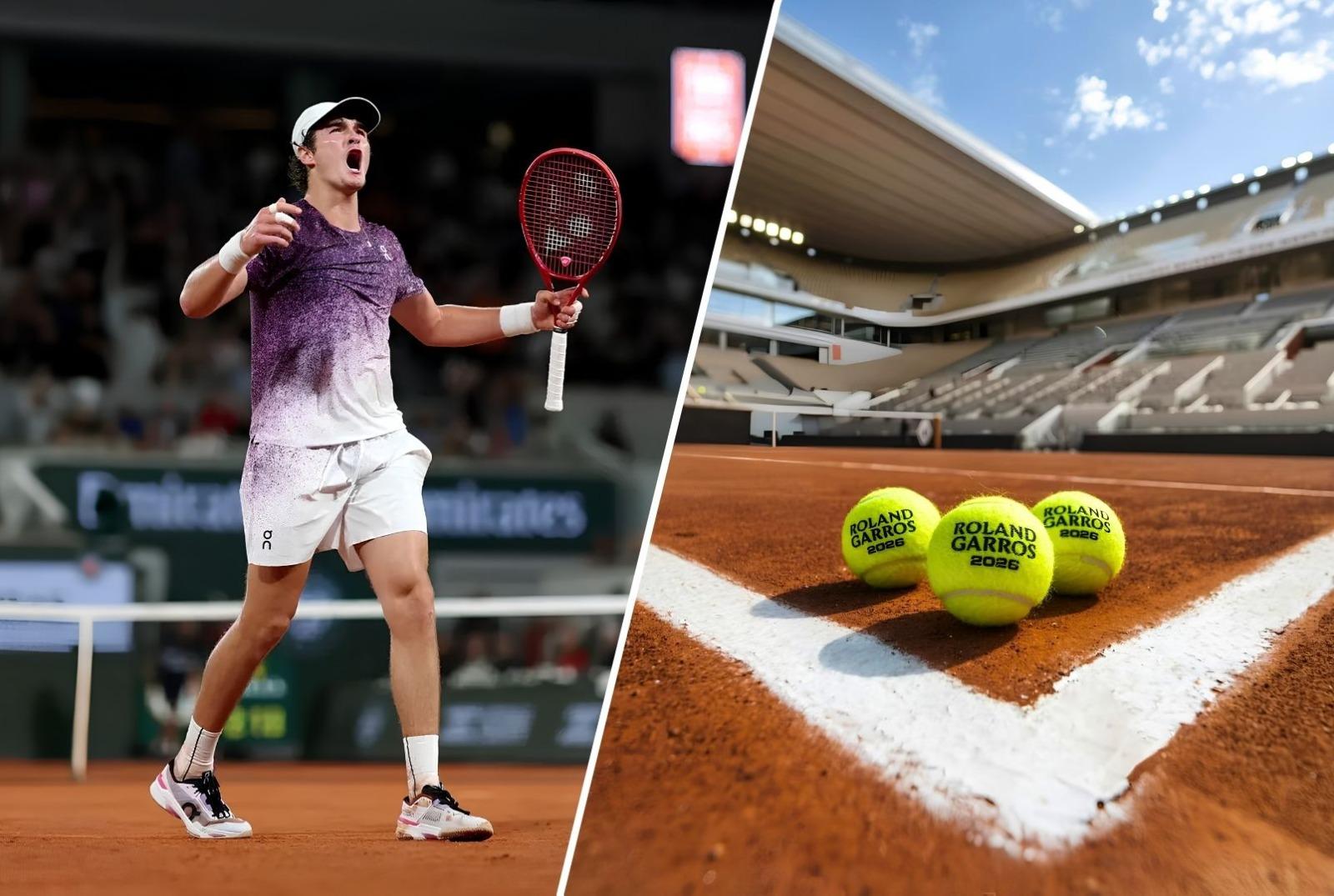
A few weeks ago, João Fonseca was one of the most exciting young players on tour. Today, he leaves Paris as one of the most talked-about names in tennis.
That shift did not happen gradually. It happened across five days on the red clay of Philippe-Chatrier, in a series of matches that announced not just a result but a temperament. At 19, Fonseca did something that requires considerably more than talent. He competed at the highest level, under enormous pressure, against the biggest names in the sport, and kept finding a way through when lesser players would have found a way out.
Roland-Garros has a long history of making careers. This year, it made one.
Key Takeaways
• Fonseca, 19, became the first Brazilian man in the Roland-Garros quarter-finals since Gustavo Kuerten in 2004.
• He became the first teenager ever to defeat Novak Djokovic at a Grand Slam, winning 4-6, 4-6, 6-3, 7-5, 7-5 in 4 hours 53 minutes.
• He produced consecutive comeback victories from two sets down — against Dino Prizmic in R3 and Djokovic in R4.
• He left Paris in the quarter-finals, beaten by Jakub Menšík. The impression on the sport was considerably larger than that result.
History Made on the Red Clay
Fonseca arrived in Paris ranked 28th in the world — high enough to be taken seriously, young enough that no one quite knew how he would respond when the weight of the tournament fell on him. The answer came early.
In the third round, trailing Dino Prizmic by two sets, Fonseca did not tighten. He played his way through, point by point, until the match turned. It was the kind of performance that gets noticed. What came two days later made it feel like context.
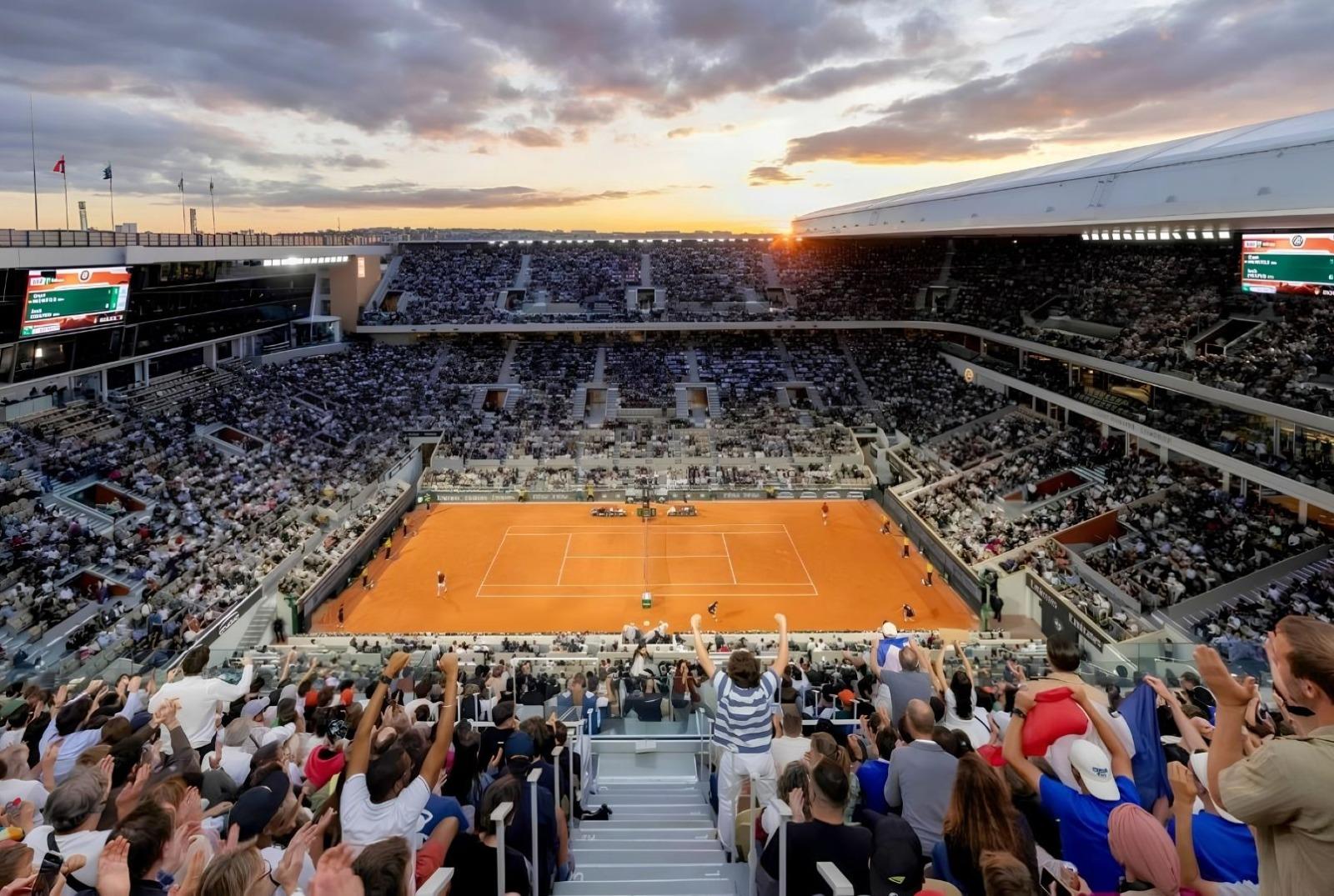
On Court Philippe-Chatrier, 15,000 fans watched Fonseca face Novak Djokovic — a player with 24 Grand Slam titles, a Roland-Garros match record spanning two decades, and a 289-1 record when leading two sets to love at a major. Fonseca found himself in exactly the same position as against Prizmic: two sets down, the crowd enormous, the moment as large as tennis gets.
He rallied. He won in five sets. The match lasted 4 hours and 53 minutes and ended under the Philippe-Chatrier floodlights with three consecutive aces. Fonseca finished with 11 aces and a 74 per cent first-serve rate. Djokovic left the court to a standing ovation as questions circled about whether this had been his final Roland-Garros.
The Djokovic Match — At a Glance | |
Result | Fonseca def. Djokovic 4-6, 4-6, 6-3, 7-5, 7-5 |
Duration | 4 hours 53 minutes |
Court | Philippe-Chatrier (15,000 capacity, sold out) |
Fonseca aces | 11 (including 3 in a row to close the match) |
Fonseca 1st serve % | 74% |
Record broken | First teenager ever to defeat Djokovic at a Grand Slam |
Previous record | Djokovic was 289-1 when leading 2-0 in sets at a major |
To understand what that result meant, consider who Gustavo Kuerten is to Brazilian tennis. Three Roland-Garros titles. A 2001 clay-court season among the finest in the sport's history. When Fonseca then defeated two-time finalist Casper Ruud in four sets to confirm his quarter-final place — with Kuerten watching from the stands — the moment carried a significance that statistics could not fully capture.
The ATP Tour notes that Fonseca became the youngest Brazilian man to reach a Roland-Garros quarter-final in the Open Era and just the third South American teenager to reach a Grand Slam quarter-final at all, after Guillermo Perez Roldan in 1988 and Juan Martin del Potro in 2008.
João Fonseca at Roland-Garros 2026: Tournament Highlights
Stat | Detail |
Age at tournament | 19 years old |
Round reached | Quarter-finals |
Consecutive comebacks from two sets down | 2 — vs Dino Prizmic (R3), vs Novak Djokovic (R4) |
Most notable match | Djokovic: 4-6, 4-6, 6-3, 7-5, 7-5 in 4 hours 53 minutes |
Historic milestone | First Brazilian man in Roland-Garros QF since Kuerten (2004) |
Additional record | First teenager ever to defeat Djokovic at a Grand Slam |
QF result | Lost to Jakub Menšík in four sets |
His run ended in the quarter-finals, beaten by Jakub Menšík in four sets. The result almost feels secondary.
“Tough match today, but really positive week. Played good tennis this week, and coming from a little injury and not having any expectations for this tournament — I still made a great run.”
The Way He Competed
What made this Roland-Garros special was not simply how far Fonseca went. It was the way he competed. The composure under pressure. The belief when trailing. The ability to perform on the sport's biggest stage while carrying the expectations of an entire nation.
Two back-to-back recoveries from two sets down in the same tournament is not coincidence. It is a pattern — a statement about how a player thinks when losing, whether they look for an exit or look for a way back. Fonseca, at 19, appeared to do the latter instinctively. That is not something that can be coached late. It is either there or it is not, and Paris showed it is there in him.
There is also the question of the opponent. Fighting back against a difficult draw is one thing. Doing so against Novak Djokovic, with the weight of a Philippe-Chatrier crowd and the knowledge that Djokovic had lost only once in 289 matches when two sets ahead at a major, is something categorically different. Djokovic has broken players of far greater experience from more comfortable positions. The fact that Fonseca not only held firm but eventually dictated the closing stages speaks to a competitive quality that is rare at any age.
What This Means for Brazilian Tennis
Since Gustavo Kuerten's final Roland-Garros quarter-final in 2004, Brazilian men's tennis has produced talent without producing a figure of comparable scale. More than two decades of searching, of promising players who made it partway and no further, of a country waiting for someone capable of carrying the sport forward the way Kuerten once did.
Fonseca may be that player. It is too early to say with certainty — careers are long, clay-court tennis is unforgiving, and quarter-finals are not titles. But the composure he showed in Paris suggested a player who does not simply belong at this level. He appears to thrive at it.
Kuerten was in the stands at Roland-Garros to watch Fonseca close out the Ruud match. That detail is not decoration. It is the story condensed into a single image: the last great Brazilian champion watching the one who might become the next.
Tennis Has Its Next Star
Every generation, Roland-Garros introduces someone new to the world. Rafael Nadal won the title on his debut in 2005. Carlos Alcaraz reached the quarter-finals in 2022 before going on to define the sport's immediate era. These were not simply good results. They were arrivals — moments when it became clear that the sport's future had a name and a face that audiences would follow for years.
Fonseca's run in 2026 belongs in that conversation. Not because he won the title, but because of how he competed and who he beat along the way. Djokovic on Philippe-Chatrier, trailing by two sets. Ruud on the same court two days later, with his hero watching from the tribunes. The kind of tennis that makes people stop what they are doing and watch.
He is 19. He has already won an ATP title. He has now shown, on the sport's biggest clay-court stage, that pressure does not diminish him — and for a global audience that follows both the players and the places they compete, Paris in June 2026 will be a moment they remember.
For Brazil, it was a reminder of what is possible. For tennis, it felt like the arrival of another player capable of shaping the sport's next era.
Quick Recap: João Fonseca at Roland-Garros 2026 | |
Age | 19 years old (born August 2006) |
Run | Third round → Quarter-finals |
Djokovic scoreline | 4-6, 4-6, 6-3, 7-5, 7-5 (4h 53min) |
Key record | First teenager ever to beat Djokovic at a Grand Slam |
Brazilian record | First to reach Roland-Garros QF since Kuerten, 2004 |
Comebacks | 2 consecutive victories from two sets down |
QF exit | Lost to Jakub Menšík in four sets |
Frequently Asked Questions |
Why is Fonseca's win over Djokovic historic? Fonseca became the first teenager ever to defeat Novak Djokovic at a Grand Slam in the Serbian's 22-year major career. He also became only the second player ever to beat Djokovic after losing the first two sets at a major — Djokovic had won 289 of his previous 290 matches from that position. |
What were the match details against Djokovic? Fonseca won 4-6, 4-6, 6-3, 7-5, 7-5 in 4 hours and 53 minutes on Court Philippe-Chatrier. He finished with 11 aces — including three consecutive aces to close the match — and a 74 per cent first-serve rate. The match began in afternoon sunshine and ended under floodlights in front of 15,000 spectators. |
What comes next for João Fonseca? Fonseca leaves Roland-Garros 2026 ranked in the top 30 and with a profile that has changed significantly. The grass-court season follows — Wimbledon begins in late June — and Fonseca will arrive as one of the most watched young players in the sport. His ranking points from Paris will keep him well seeded at the remaining Grand Slams of 2026. |
Is Fonseca the first South American teenager to reach a Grand Slam quarter-final? No — he is the third. Guillermo Perez Roldan of Argentina reached the Roland-Garros quarter-finals in 1988, and Juan Martin del Potro of Argentina reached the US Open quarter-finals in 2008. Fonseca is the youngest Brazilian man ever to reach a Roland-Garros quarter-final in the Open Era. |
Roland-Garros 2026 will ultimately crown a champion. But long after the trophy is lifted, many will remember Paris as the tournament where João Fonseca announced himself to the world.