
Dressing Room Design: How to Protect Fine Tailoring
17 November 2026Written by Jason Hayes
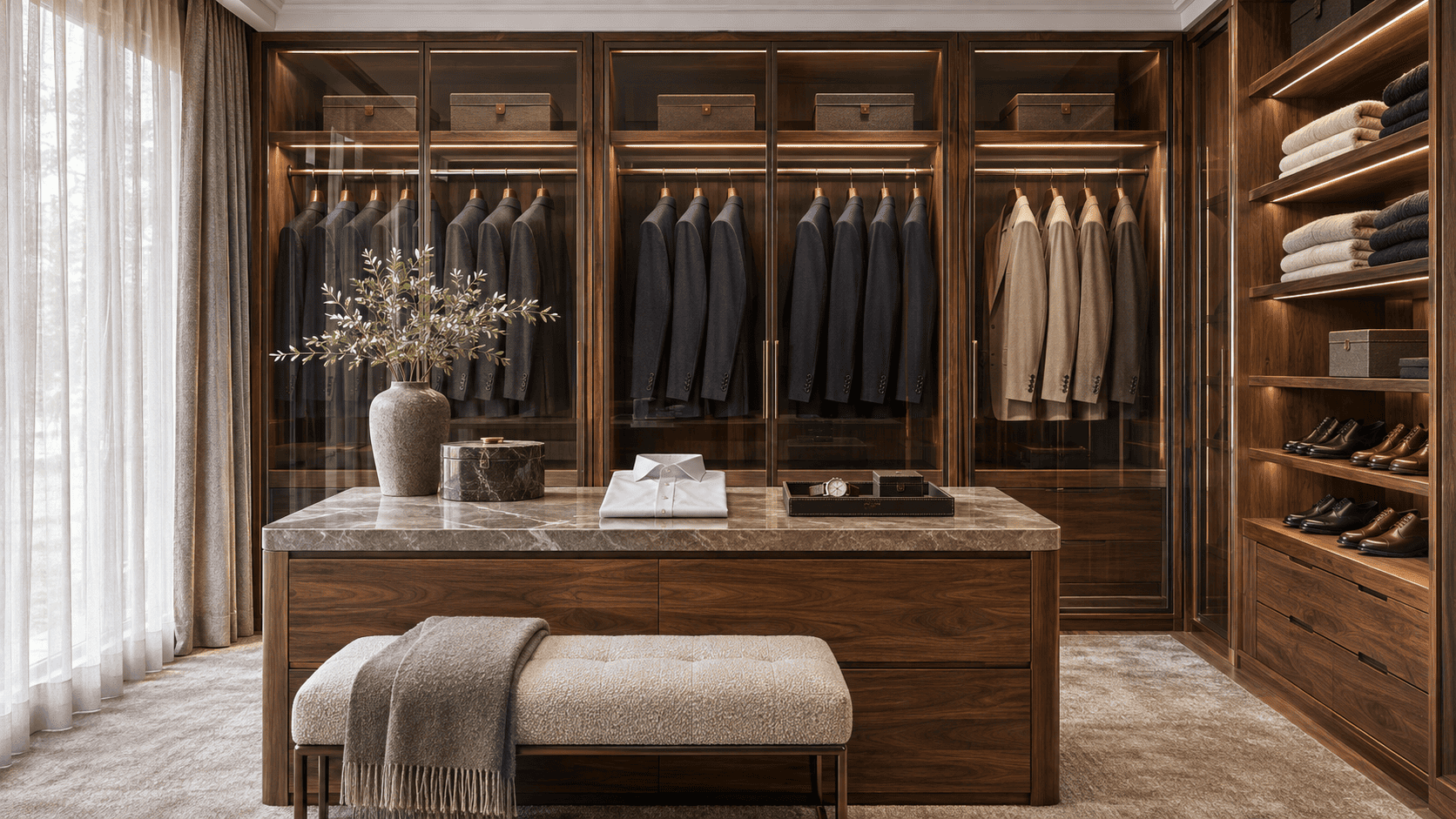
Designing a dressing room that protects fine tailoring
In luxury homes, the dressing room has become as carefully considered as the kitchen or the primary suite. Buyers expect more than a large closet: they look for natural light, custom joinery, a place to sit and a layout that makes getting ready feel effortless. For owners with a serious wardrobe, the dressing room has a practical job as well. Fine tailoring, leather shoes and delicate fabrics last far longer when they are stored correctly. Good design protects the investment hanging on the rails.
Start with climate and light
Wool, silk, cashmere and leather respond to their environment. High humidity encourages moths and mold, while very dry air can make natural fibers brittle over time. A dressing room should ideally be kept at a stable temperature with moderate humidity, which usually means integrating it into the home's climate system rather than treating it as an afterthought.
Light needs the same attention. Direct sunlight fades fabrics surprisingly quickly, especially dark navy and black cloth. Use UV-filtering glass or blinds on windows, and choose warm LED lighting inside cabinets, which produces little heat and shows true colors when you choose an outfit.
Plan the hanging space around the garments
A common mistake is designing uniform rails for everything. Jackets, trousers, shirts and coats need different heights and depths. Suit jackets require a hanging depth of around 60 centimeters, or roughly two feet, so shoulders are not crushed against a door. Long coats need a full-height section, while shirts and folded trousers fit well in double-hung zones.
Space between garments
Tailoring should never be packed tightly. Pressed together, jackets crease, lapels lose their roll and air cannot circulate. Leave a few centimeters between each garment, and allocate more hanging space than seems necessary when planning. A collection of custom made suits built to the owner's measurements deserves the same care in storage that went into making it.
Choose the right hangers and materials
Wide, shaped wooden hangers support the natural curve of a jacket's shoulders. Thin wire or plastic hangers distort shoulders and leave marks. Cedar hangers and cedar-lined drawers add a pleasant scent and help deter moths, though they should be refreshed periodically by lightly sanding the surface.
For joinery, avoid materials that release strong odors or moisture. Solid wood, lacquered panels and linen-lined drawers are all good choices. Breathable cotton garment bags protect rarely worn pieces such as a tuxedo or a heavy overcoat, whereas plastic covers trap moisture and should be removed after dry cleaning.
Take inspiration from retail display
Well-designed boutiques are experts at presenting clothing so it is easy to see and pleasant to browse. Notice how a good suit store organizes its floor: garments grouped by color and weight, shoes displayed at eye level, accessories in shallow, felt-lined drawers and a full-length mirror placed where the light is best. The same principles translate well to a private dressing room.
Group suits by season or by color, keep ties and pocket squares in shallow trays and dedicate an island or a valet stand to preparing the next day's outfit. A three-way mirror with good lighting makes it easier to check fit and proportions before you leave the house.
Shoes, accessories and the details
Quality leather shoes last decades when stored on cedar shoe trees, which absorb moisture and maintain their shape. Open shelving with a slight tilt makes pairs visible, while closed cabinets keep dust away from rarely worn styles. Watches benefit from a dedicated drawer with a winder for automatic pieces, and belts roll neatly into compartments without cracking the leather.
Consider practical additions too: a built-in steamer station, a small seating area for putting on shoes and a hamper for items going to the cleaner.
A dressing room that adds value
A thoughtfully designed dressing room improves daily routines and protects valuable clothing, and it is also a feature that stands out when a property comes to market. Focus on stable climate and UV protection first. Plan hanging depths and heights around the garments you own, and leave space between them. Choose shaped wooden hangers, cedar and breathable storage. Borrow display ideas from fine retail, and finish with details for shoes, watches and accessories. The result is a room that works as well as it looks.